
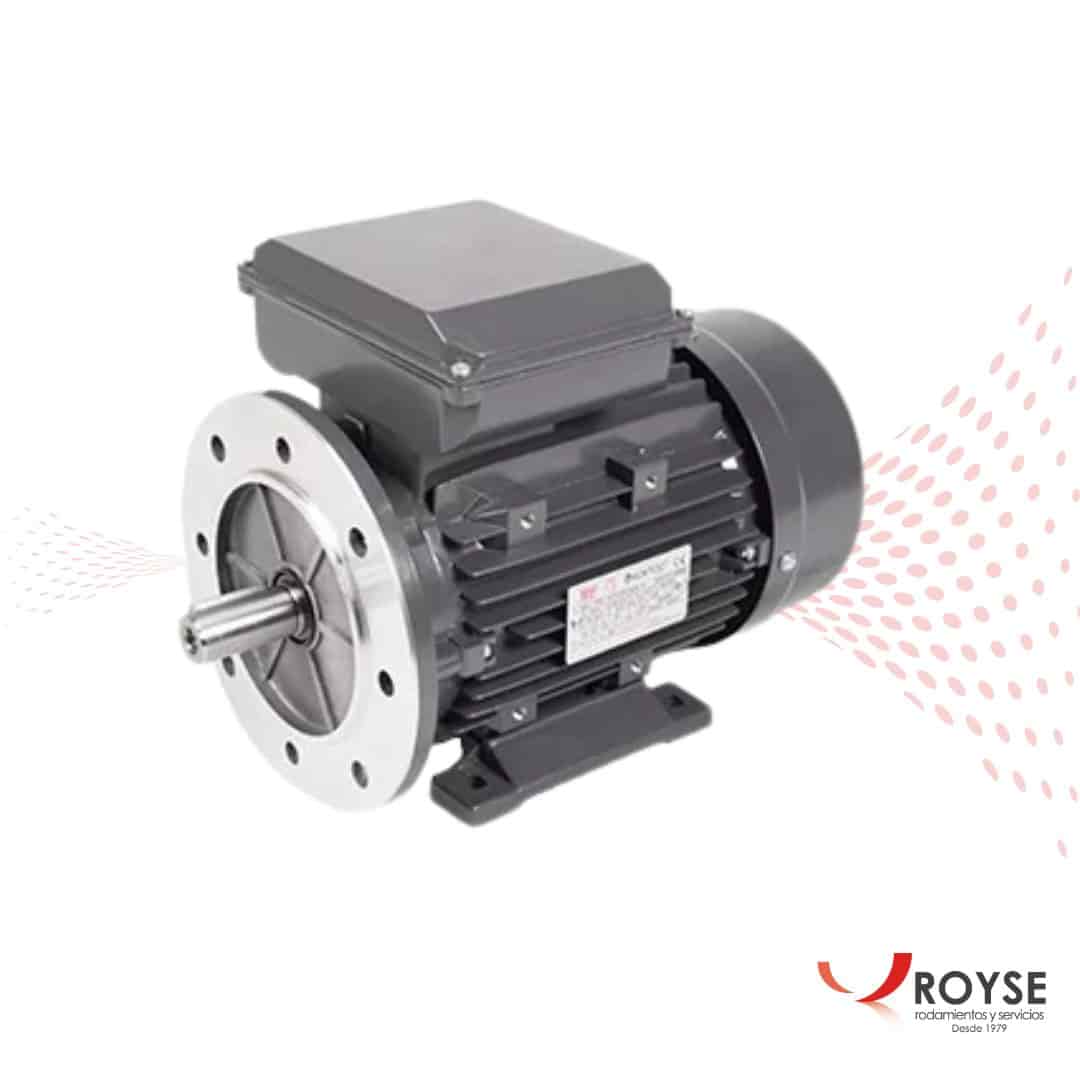
Industrial electric motors are the heart of automation and electrification in modern industry.
From production lines to heavy machinery, these systems enable the efficient, precise, and reliable transformation of electrical energy into motion.
However, not all motors are the same, and choosing the right one can make the difference between an efficient system and a constant operational problem.
What Is an Industrial Electric Motor?
An industrial electric motor is a device that converts electrical energy into mechanical energy to drive machinery and production systems.
Unlike domestic applications, these motors are designed to:
- Work in demanding conditions
- Operate continuously
- Deliver high performance and durability
They are a key component in any industrial automation or electrification system.
If you want to see how these components integrate into complete systems, you can explore technical solutions in the Royse industrial components catalog.
Types of Industrial Electric Motors
Choosing the correct type of motor is critical for system performance.
Alternating Current (AC) Motors
These are the most widely used in industrial environments.
Asynchronous Motors (Induction Motors)
- Robust and reliable
- Low maintenance
- Competitive cost
Typical application: pumps, fans, conveyor belts.
Synchronous Motors
- High efficiency
- Constant speed
- Better energy performance
Typical application: processes requiring constant precision.
Direct Current (DC) Motors
Less commonly used today, but still have specific applications.
- Precise speed control
- Good dynamic response
Typical use: legacy machinery or highly specific applications.
Brushless Motors
Increasingly relevant in modern industry.
- High efficiency
- Lower maintenance
- Longer service life
Key in industrial electric mobility and advanced automation
Stepper Motors and Servomotors
Motors designed for precise control.
Servomotors
- Position, speed, and torque control
- High precision
Use: robotics, automation, CNC
Stepper Motors
- Incremental movement
- High repeatability
Use: positioning systems
Applications of Industrial Electric Motors
Electric motors are present in virtually all industrial sectors:
Logistics Industry
- Transport systems
- AGVs and AMRs
- Automated warehouses
Directly related to solutions such as industrial transport and handling, where the motor is key to continuous movement.
Manufacturing Industry
- Production lines
- Machine tools
- Assembly systems
Construction and Heavy Machinery
- Electric excavators
- Lifting platforms
- Compacting equipment
Energy Industry
- Pumps
- Compressors
- Ventilation systems
Any process requiring movement, automation, or precision depends on electric motors.
To understand their impact on global energy consumption, you can consult this analysis by the International Energy Agency, focused on industrial motor systems.
How to Choose an Industrial Electric Motor
Motor selection should not be based solely on power.
Key factors:
✔ Required Power and Torque
Must be adapted to the actual load of the application.
✔ Type of Use
- Continuous
- Intermittent
- Frequent starts
✔ Speed Control
Need for variable frequency drives or control systems.
✔ Energy Efficiency
Direct impact on operating costs.
✔ Working Environment
- Temperature
- Humidity
- Dust or harsh conditions
Poor selection can reduce system service life and increase costs.
Advantages of Industrial Electric Motors
The adoption of electric motors provides clear benefits:
✔ High Energy Efficiency
Lower consumption compared to traditional systems.
✔ Lower Maintenance
Fewer moving parts and less wear.
✔ Precision and Control
Especially in automated applications.
✔ Integration with Intelligent Systems
Compatible with IoT, automation, and digital control.
✔ Sustainability
Emission reduction and regulatory compliance. You can expand on this point in the energy policy of the European Commission.
Electric Motors and Industrial Mobility
The electrification of industrial machinery is driving the use of advanced electric motors.
In industrial electric mobility applications:
- Compact motors are required.
- High power density.
- Integration with transmission systems.
This is where complete solutions come into play, where motor and transmission work as a single optimized system.
The Role of Transmission in Motor Performance
A motor alone does not guarantee efficiency.
Transmission (gearboxes, couplings, etc.) is key to:
- Adjust speed and torque
- Optimize performance
- Reduce energy losses
The correct integration between motor and transmission is what defines the actual efficiency of the system.
You can see integration examples in linear technology and mechanical systems solutions, where movement and precision depend directly on this combination.
Conclusion
Industrial electric motors are a key element in the efficiency, automation, and competitiveness of any industrial company.
Choosing the right type, integrating it correctly, and optimizing its operation is not just a technical decision, but a strategic one.
If you need guidance to select the appropriate electric motor or integrate complete solutions into your machinery:
At Royse, we help you optimize the performance of your industrial systems with solutions tailored to each application. You can do so directly from our website.
FAQ
Which Electric Motor Is Best for Industry?
It depends on the application, but asynchronous motors are the most widely used due to their reliability.
What Is the Difference Between an AC and DC Motor?
AC motors are more robust and common in industry, while DC motors offer greater speed control.
How Long Does an Industrial Electric Motor Last?
With proper maintenance, it can last for years or even decades.
How to Improve the Efficiency of an Electric Motor?
Through proper selection, use of variable frequency drives, and transmission optimization.