What is a car body?
Body assembly, sealing and protection. It is the vehicle structure supported on the chassis and which houses the vehicle’s occupants (both passengers and the driver), its load, and various mechanical components of the car such as the engine. It is a vehicle element that is very closely related to its comfort, safety and cost.
Why is a car body so important?
Safety has increased significantly thanks to motorsport disciplines such as Formula 1, which, through research and development, have created improvements that make cars safer. One example of improvements adopted from competition is disc brakes, which greatly improve braking distance compared to drum brakes.
However, one of the most important safety elements is the bodywork, as it separates us from the elements and protects us from impacts. In addition, it gives the car rigidity, which helps reduce torsion under heavy stress and protects us in the event of an accident. As we say, it is what separates us from the road, with everything that entails.
Another function of the bodywork that many people are unaware of, or do not consider important, is aerodynamics. Aerodynamics is essential in any vehicle, as it reduces air resistance and allows the car to be more efficient. This feature has also been brought over from competition.

Stages of body protection
For safety inside the car to be optimal, the body protection must also be checked; that is, what process that protection has undergone to ensure it is correct.
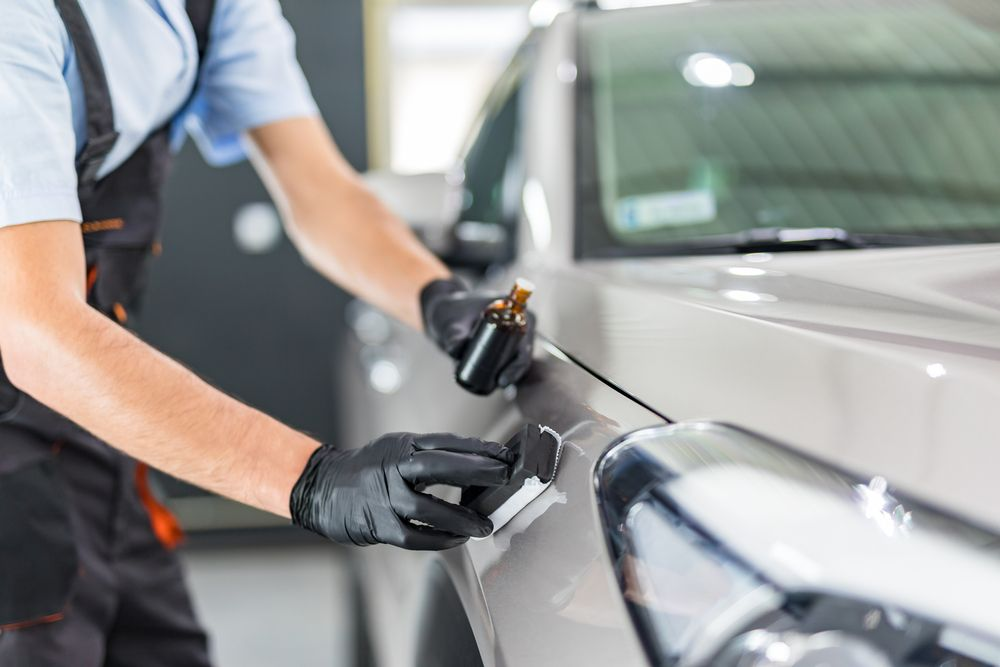
The anti-corrosion treatment consists of the following stages:
1) Protected sheet metal: Since zinc is a metal that self-protects against corrosion through its own oxidation, the steel sheet supplied for body manufacturing already comes protected with a light layer of zinc.
2) Phosphating: This operation is carried out by fully immersing the bodywork in a hot aqueous solution containing acid phosphates. This phosphating is of the microcrystalline zinc type, and ensures superior corrosion resistance and better paint adhesion.
3) Chromate passivation: Its purpose is to remove the limescale salts that remain in the rinse waters and that generate corrosion, as well as to limit the formation of rust in the porosities of the sheet metal.
4) Cataphoresis: In this operation, the bodywork is introduced again into a tank where, by full immersion, the cataphoretic solution is deposited uniformly on the sheet metal, even on interiors and cavities. Its main advantage over an immersion bath is that the paint adheres to the sheet metal by molecular attraction, and not only by contact. Once cataphoresis is complete, the bodywork is baked at 200°C, ensuring waterproofing.
5) Mastics, paints and lacquers: In successive stages, various mastics are applied depending on the function required and, subsequently, several coats of paint and lacquers are applied. In the lower areas of the bodywork, “anti-gravel” protection is applied in the form of a plastic coating.
The role of adhesives in the automotive sector
And to achieve that total safety, what should be used? The most important thing at this point is proper sealing or bonding.
Adhesives have been used in the automotive industry for around 40 years, although it is in the last two decades that their expansion has been most noticeable in the sector. Currently, an average of between 15 and 18 kg of adhesives are used in a family vehicle, whereas in the early days just over one kilogram was used.
This very significant and substantial increase is due to the advantages that adhesives offer over other more traditional fastening systems such as welding. The most decisive advantages are as follows:
- It makes it possible to reduce the total weight used in the joining and fastening system.
- It enables bonding between materials of the same or different nature.
- It eliminates the drawbacks inherent to other fastening systems such as welding.
- It increases safety levels.
- It increases comfort inside the cabin.
- It provides anti-corrosion protection.
- It provides high levels of strength.
ROYSE, LOCTITE AND “TEROSON” SEALANTS
TEROSON® by Henkel is the leading brand of adhesive bonding, sealing, coating, acoustics, curing and reinforcement solutions in OEM transport assembly, vehicle repair and maintenance (VRM), industrial assembly and construction industry applications.
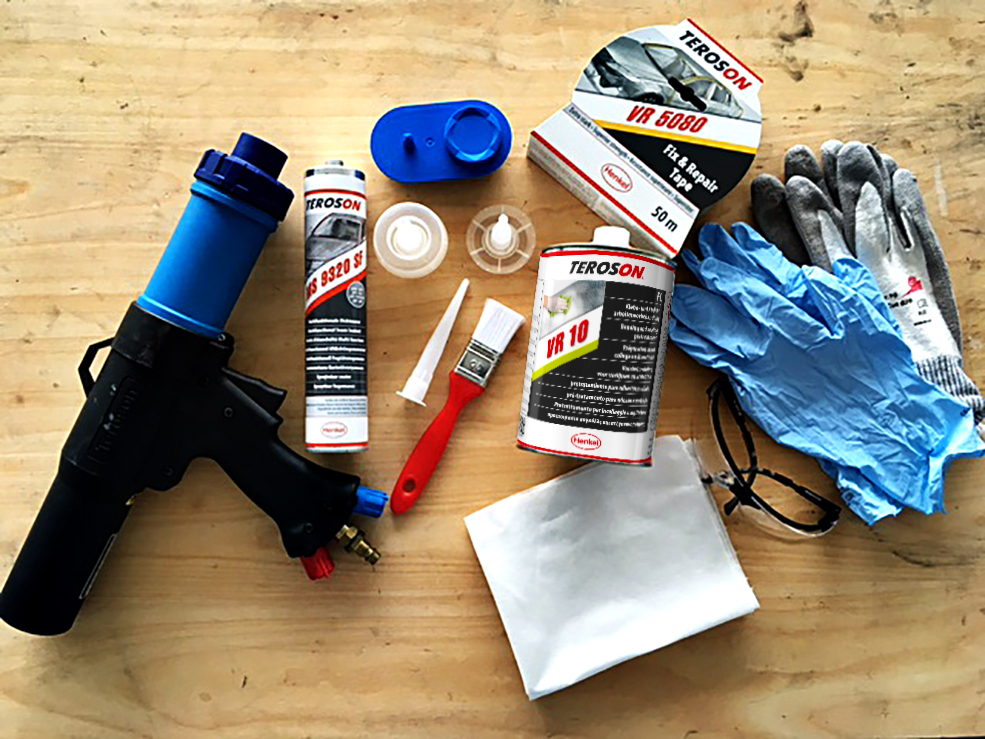
In order to always be by your side, at ROYSE we offer you our well-known customer proximity model to cover any need, reducing processing time and achieving an immediate response level. How is this possible? Very simple: we have branches throughout the territory, all of which maintain a high level of stock.
If you have any questions or need information, please contact us and we will be happy to assist you.